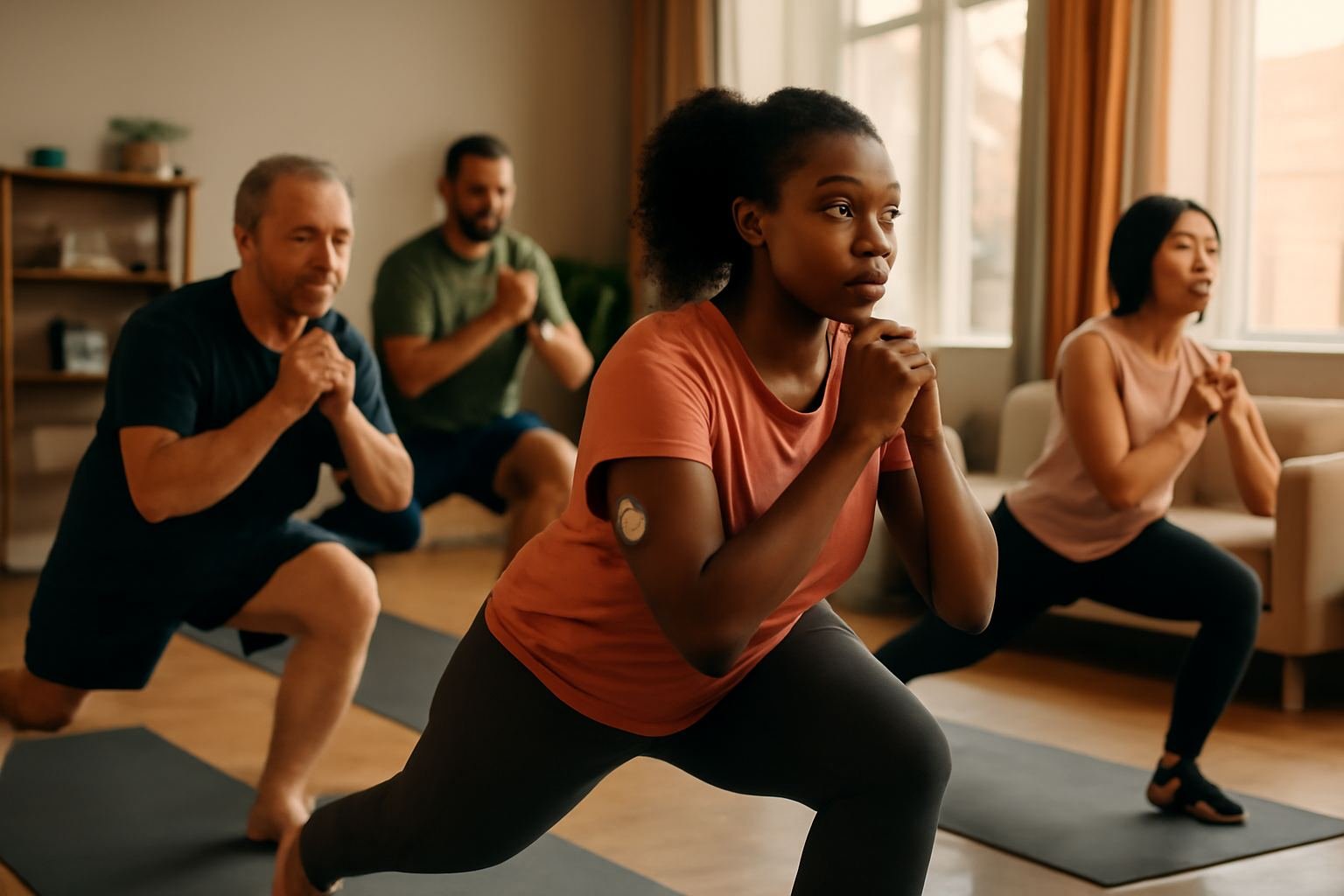
In the pursuit of fitness, we often focus exclusively on physical intensity—lifting heavier, running faster, pushing harder. While this drive produces results, it is only half the equation. Mindful movement practices like yoga and meditation address the other half: recovery, flexibility, stress management, and mental clarity. Integrating these practices enhances every aspect of your fitness journey.
The Mind-Body Connection
Western fitness has historically separated the mind and body, treating them as distinct systems. Eastern traditions like yoga have always understood their interconnectedness. Modern science now confirms what ancient wisdom has long held: mental and physical health are deeply intertwined.
When you are stressed, your body produces cortisol, which breaks down muscle, promotes fat storage, and impairs recovery. When you are calm and focused, your body operates optimally—recovering faster, building muscle more efficiently, and performing better. Mindful movement directly influences this mind-body connection.
Benefits of Yoga for Fitness
Improved Flexibility and Mobility
Yoga systematically improves flexibility and mobility, addressing the tightness that limits performance and causes injury. Regular practice increases range of motion in joints and lengthens tight muscles. This translates directly to better squat depth, improved running stride, and reduced injury risk.
Enhanced Strength
Yoga builds functional strength, particularly in the core, shoulders, and stabilizing muscles. Poses like plank, chaturanga, and warrior sequences build isometric strength that complements weight training. Many athletes find that yoga reveals strength imbalances they didn't know they had.
Better Balance and Proprioception
Yoga develops balance and body awareness (proprioception). This improves athletic performance and reduces injury risk. Better balance translates to more efficient movement patterns in every activity.
Stress Reduction
Yoga activates the parasympathetic nervous system, counteracting the fight-or-flight response that dominates modern life. This reduces cortisol, improves sleep, and enhances recovery. The stress-reducing benefits of yoga may be its most valuable contribution to fitness.
Improved Breathing
Yoga emphasizes breath control (pranayama), which improves respiratory efficiency and oxygen utilization. Better breathing enhances cardiovascular performance and reduces exercise-induced fatigue. Many athletes find that conscious breathing improves their endurance and focus.
Injury Prevention
Yoga strengthens stabilizing muscles and improves joint mobility, addressing the imbalances that lead to injury. It also develops body awareness, helping you recognize and correct poor movement patterns before they cause problems.
Types of Yoga for Fitness
Hatha Yoga
A gentle, foundational style that emphasizes basic poses and alignment. Ideal for beginners and those seeking relaxation and flexibility.
Vinyasa Yoga
A flowing style that links breath to movement. Builds strength, flexibility, and cardiovascular fitness. More dynamic and physically demanding than Hatha.
Ashtanga Yoga
A rigorous, structured practice that builds significant strength and flexibility. Physically demanding and best for experienced practitioners.
Yin Yoga
A slow style that holds poses for 3 to 5 minutes, targeting deep connective tissues. Excellent for flexibility and joint health. Complements intense training perfectly.
Restorative Yoga
A deeply relaxing practice using props to support the body. Ideal for recovery days and stress reduction.
Meditation for Fitness
Meditation is often dismissed by fitness enthusiasts as too passive or spiritual. However, research consistently demonstrates its profound benefits for physical performance and recovery.
Stress Reduction
Meditation reduces cortisol and activates the parasympathetic nervous system. This improves recovery, reduces inflammation, and enhances sleep quality. For athletes, this means faster recovery and better adaptation to training.
Improved Focus
Meditation trains attention and concentration. This translates directly to better workout quality—you stay present, maintain proper form, and push through discomfort more effectively. Athletes who meditate report improved performance under pressure.
Pain Management
Meditation has been shown to reduce the perception of pain. This helps athletes push through challenging workouts and recover from injuries more effectively. It does not eliminate pain but changes your relationship with it.
Better Sleep
Meditation improves sleep quality, which is essential for recovery. Even 10 minutes of meditation before bed can improve sleep onset and quality.
Enhanced Body Awareness
Meditation develops interoception—awareness of your body's internal state. This helps you recognize fatigue, hunger, and recovery needs more accurately, preventing overtraining and improving nutrition choices.
Getting Started with Meditation
Start small. Five minutes daily is more effective than 30 minutes once weekly. Find a quiet space, sit comfortably, and focus on your breath. When your mind wanders (and it will), gently return attention to your breath without judgment.
Guided meditation apps like Headspace, Calm, or Insight Timer provide structure for beginners. Start with short sessions and gradually increase duration as you build the habit.
Integrating Mindful Movement into Your Routine
You don't need to overhaul your entire fitness program. Small additions produce significant benefits:
Daily: 10 minutes of meditation, ideally in the morning or before bed.
Post-workout: 10 to 15 minutes of yoga for recovery and flexibility.
Rest days: A longer yoga session (30 to 60 minutes) for active recovery.
Weekly: One dedicated yoga session to address flexibility and stress.
During workouts: Practice mindful breathing during rest periods to enhance recovery and focus.
Sample Weekly Schedule
- Monday: Strength training + 10 minutes yoga
- Tuesday: Cardio + 10 minutes meditation
- Wednesday: Strength training + 10 minutes yoga
- Thursday: Rest day with 30-minute yoga session
- Friday: Strength training + 10 minutes meditation
- Saturday: Long cardio + 15 minutes yoga
- Sunday: Rest day with 20 minutes meditation
Common Misconceptions
Myth: Yoga is only for flexible people. Fact: Yoga is for everyone. Inflexible people benefit most, as they have the most room to improve.
Myth: Meditation requires emptying your mind. Fact: Meditation is about observing thoughts without judgment, not eliminating them.
Myth: Mindful movement isn't real exercise. Fact: Styles like Vinyasa and Ashtanga provide significant physical challenge.
Myth: You need lots of time. Fact: Even 5 to 10 minutes daily produces meaningful benefits.
Conclusion
Mindful movement is not a replacement for strength training and cardio; it is a complement that enhances every aspect of fitness. Yoga improves flexibility, strength, and stress management. Meditation enhances focus, recovery, and body awareness. Together, they create a more complete, sustainable, and enjoyable fitness practice. Start with just 10 minutes daily, and discover how mindful movement transforms not just your body, but your entire approach to health and well-being.