
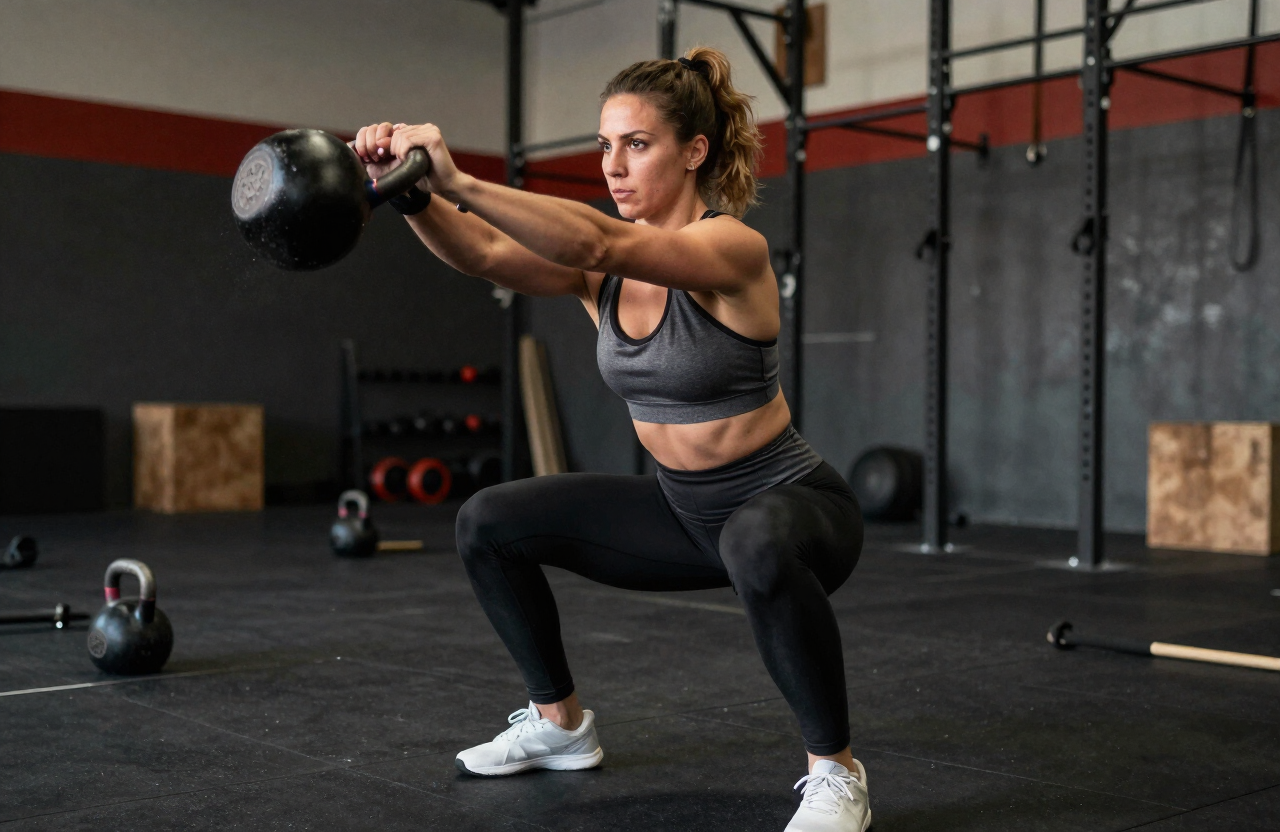
If you’re starting strength training in 2026, you’re in a great spot. More people are prioritizing “functional strength,” wearable data, and sustainable progress—not just random workouts. The good news: you don’t need fancy equipment or a perfect program. You need a few fundamentals mastered so your body adapts safely and consistently.
This guide covers the strength-training basics every beginner should master—so you can train with confidence, avoid common mistakes, and build momentum week after week.
Why Strength Training Still Wins In 2026
Strength training isn’t a trend you “try.” It’s a foundation for everything else: better posture, stronger joints, improved metabolism, and more resilient muscles and connective tissue. In 2026, the most successful beginners are the ones who treat strength like a skill—learnable, repeatable, and measurable.
When you master the fundamentals, you’ll spend less time guessing and more time progressing.
Fundamental 1: Learn The Movement Pattern, Not Just The Exercise
Beginners often chase exercise names. Instead, focus on movement patterns. Most strength training revolves around a few core categories:
- Squat pattern (legs + hips)
- Hinge pattern (hips back, hamstrings + glutes)
- Push pattern (chest/shoulders/triceps)
- Pull pattern (back/biceps)
- Carry pattern (bracing + grip + core)
- Rotation/anti-rotation (core control)
Pick exercises that match these patterns and practice them until they feel stable. For example:
- Squat: goblet squat, bodyweight squat, leg press
- Hinge: Romanian deadlift (RDL), hip hinge with a dowel, kettlebell deadlift
- Push: push-ups, dumbbell bench press, overhead press
- Pull: rows (cable/dumbbell), lat pulldown, assisted pull-ups
- Carry: farmer’s carry, suitcase carry
Mastery comes from repeating the pattern with good form—not from constantly swapping exercises.
Fundamental 2: Nail Your Form With A Simple Checklist
You don’t need a coach on day one, but you do need a consistent form standard. Use this quick checklist for most compound lifts:
- Brace before you move: take a breath and tighten your midsection (think “ribs down, core on”).
- Control the lowering: don’t drop into the bottom position.
- Move through full, comfortable range: stop short of pain or unstable positions.
- Keep joints stacked: knees track over toes, shoulders stay controlled.
- Finish strong: don’t “collapse” at the top.
A practical rule: if you can’t maintain the checklist for the last 2–3 reps, the weight is too heavy for your current skill level.
Fundamental 3: Use The Right Intensity (The Beginner Sweet Spot)
Intensity is where most beginners either stall or get discouraged. The goal isn’t to max out every session. The goal is to train hard enough to grow, without turning every workout into a grind.
A beginner-friendly intensity target:
- Work sets of most exercises: stop with 1–3 reps in reserve (RIR)
- That means you should feel like you could do 1–3 more reps with good form
If you’re always at 0 RIR (near failure) you’ll likely accumulate fatigue faster than your body can adapt. If you’re always at 5–6 RIR, you may not provide enough stimulus.
How to apply this today:
- Choose a weight you can lift for your target reps while keeping form.
- When you hit the top of your rep range with the same form, increase weight next time.
Fundamental 4: Master Progressive Overload Without Overcomplicating It
Progressive overload is simply doing a little more over time. Beginners often think it means “add weight every workout.” That’s not required. You can progress in multiple ways:
- Add reps (same weight, more reps)
- Add weight (same reps, slightly heavier)
- Add sets (more total work)
- Improve control (slower tempo, better range)
A simple progression method that works:
- Pick 2–4 rep ranges for each lift (example: 6–10 reps)
- Stay in that range for several weeks
- When you can complete the top end of the range for all sets with good form, increase weight by a small amount next session
Small increases matter. For dumbbells, that might be 1–2 kg. For machines, it might be the smallest plate jump available.
Fundamental 5: Build A Balanced Beginner Program (Not A Random Workout)
A strong beginner program hits the major movement patterns at least 2–3 times per week. You don’t need 12 exercises. You need enough variety to train your body comprehensively.
Two effective beginner schedules:
Option A: Full-Body 3 Days/Week
- Day 1: Squat pattern + Push + Pull + Core
- Day 2: Hinge pattern + Push + Pull + Carry
- Day 3: Squat or Lunge + Overhead press + Row + Core
Option B: Upper/Lower 4 Days/Week
- Upper: Push + Pull + Arms (optional)
- Lower: Squat + Hinge + Core
- Upper: Push + Pull + Arms (optional)
- Lower: Squat/Leg press + Hinge + Carry
If you’re busy, full-body 3 days is often the best starting point because it’s easier to recover from and easier to stay consistent.
Fundamental 6: Understand Volume (How Much Work You Need)
Volume is the total amount of hard work you do. For beginners, more isn’t always better. You want enough volume to stimulate growth and strength without wrecking your recovery.
A practical beginner volume target:
- Per muscle group: about 8–15 hard sets per week
“Hard sets” means sets where you’re working close enough to your target intensity (often 1–3 RIR). If you’re doing 20+ hard sets per week as a beginner, you may feel sore for days and progress slower.
Start with the minimum effective dose:
- 2–3 sets per exercise
- 2–4 exercises per session
- Add sets only after you’re recovering well
Fundamental 7: Choose Exercise Selection That Matches Your Body
In 2026, beginners have access to more variations than ever. But variation isn’t the goal—adaptation is.
Choose exercises that meet these criteria:
- You can perform with stable form
- You can progress over time (reps and/or load)
- They don’t cause sharp pain
- They fit your equipment and schedule
If you’re new, you might do:
- Goblet squat instead of back squat
- Dumbbell RDL instead of barbell deadlift
- Machine row or supported cable row instead of heavy barbell rows
- Incline push-ups or dumbbell bench instead of strict overhead press
You can still build serious strength with beginner-friendly variations.
Fundamental 8: Control Tempo And Range Of Motion
Tempo is how fast you move through the lift. Beginners don’t need extreme slow reps, but you should avoid sloppy bouncing.
A simple tempo guideline:
- Lower in about 2–3 seconds
- Pause briefly if needed to stay stable
- Lift with controlled speed
Range of motion should be “full enough to work the muscle” without turning the movement into a joint-stress contest. If your shoulders or hips feel unstable, shorten the range slightly and build control first.
Fundamental 9: Train Your Core Like A Stabilizer, Not A Crunch Machine
Core training is essential for strength, but it’s not only about crunches. Your core’s job is to brace and resist unwanted movement.
Beginner core staples:
- Dead bug (anti-extension)
- Plank variations (anti-extension/anti-rotation)
- Pallof press (anti-rotation)
- Farmer’s carry (bracing under load)
Add core work after your main lifts or on a separate day. Keep it controlled and crisp.
Fundamental 10: Recover Like It’s Part Of Training
Strength training is a stimulus; recovery is where adaptation happens. In 2026, many beginners track steps, sleep, and nutrition. Use that data to support your training, not to obsess.
Recovery fundamentals:
- Sleep: aim for 7–9 hours when possible
- Protein: include protein at each meal
- Manage soreness: mild soreness is normal; sharp pain is not
- Don’t increase volume and intensity at the same time
If you’re consistently exhausted, your performance will stall. Reduce sets or intensity slightly and focus on consistency.
A Beginner-Friendly Weekly Template (Use This Starting Monday)
Here’s a straightforward plan you can start immediately. Adjust loads so you finish each set with 1–3 reps in reserve.
Day 1 (Full Body)
- Goblet squat: 3 sets x 6–10 reps
- Dumbbell bench press or push-ups: 3 sets x 6–12 reps
- Supported row (cable/dumbbell): 3 sets x 8–12 reps
- Dead bug or plank: 2 sets x 6–10 reps (or 20–40 seconds)
Day 2 (Full Body)
- Romanian deadlift (dumbbell or bar): 3 sets x 6–10 reps
- Overhead press (dumbbell or machine): 3 sets x 6–10 reps
- Lat pulldown or assisted pull-up: 3 sets x 8–12 reps
- Farmer’s carry: 3 rounds x 20–40 meters (or 20–40 seconds)
Day 3 (Full Body)
- Split squat or leg press: 3 sets x 8–12 reps
- Incline push-ups or dumbbell bench: 3 sets x 8–12 reps
- Row variation (different grip if you want): 3 sets x 8–12 reps
- Pallof press: 2–3 sets x 8–12 reps per side
Progression rule:
- When you hit the top of the rep range for all sets with good form, add a small amount of weight next time.
- If form breaks, keep the weight and aim for the next rep milestone.
How To Know You’re Progressing (Without Guessing)
Progress isn’t only about the scale or how you look in the mirror. Track performance and consistency:
- Are your reps increasing at the same weight?
- Are you adding load while keeping form?
- Are you recovering well enough to train again?
- Are your workouts getting easier at the same intensity?
If you’re progressing in these ways, you’re doing it right.
Common Beginner Mistakes (And How To Fix Them Fast)
Mistake 1: Going Too Heavy Too Soon
Fix: start lighter, aim for 1–3 RIR, and progress gradually.
Mistake 2: Skipping Warm-Ups
Fix: spend 5–10 minutes raising body temperature and doing movement prep (light sets of the first lift).
Mistake 3: Training Every Muscle Like It’s A One-Off Event
Fix: spread volume across the week. Consistency beats intensity spikes.
Mistake 4: Changing Everything Every Week
Fix: keep the same main lifts for 4–8 weeks so you can actually progress.
Mistake 5: Ignoring Pain Signals
Fix: sharp pain, numbness, or joint instability means stop and adjust. If needed, consult a qualified professional.
Warm-Up That Takes 8 Minutes (No Excuses)
Before your first lift, do:
- 3 minutes easy cardio (bike, brisk walk)
- 2 rounds of movement prep:
- 5 bodyweight squats or hip hinges
- 8–10 scapular retractions or band pull-aparts
- 1–2 light sets of your first exercise
This primes your nervous system and improves your chances of nailing form.
Nutrition Basics For Strength Beginners
You don’t need a perfect diet. You need enough fuel and protein to support training.
Simple nutrition targets:
- Protein: aim for roughly 1.6–2.2 g per kg body weight per day (or a practical equivalent)
- Carbs: include carbs around training for performance
- Hydration: drink regularly; don’t wait until you’re thirsty
If you’re unsure, start by adding protein to every meal and including a carb source near workouts.
The 4-Week Beginner Mindset That Works
In your first month, focus on learning and consistency:
- Week 1: establish form and find workable weights
- Week 2: add reps within your rep range
- Week 3: add a small amount of weight where you can
- Week 4: consolidate—don’t overhaul everything
By the end of four weeks, you’ll have a clearer sense of what you can lift, how you recover, and what progress looks like for your body.
Your Next Step
If you’re ready to start, pick a plan (full-body 3 days or upper/lower 4 days), choose beginner-friendly variations, and commit to mastering the fundamentals for 4–8 weeks.
Strength training rewards patience. Master the movement patterns. Train with the right intensity. Progress gradually. Recover well. Then watch your confidence—and your strength—compound.
You don’t need to be advanced to get results. You just need to be consistent, intentional, and willing to learn the basics deeply.


