Ask most people what core training is and they will say crunches. Ask them what the core does and they will pause. That gap — between what we train and what the muscle actually does — is why so many people crunch for years and still have back pain, weak lifts, and no visible progress.
What Your Core Actually Does
The core is not just the rectus abdominis (the 'six-pack' muscle). It is a cylinder of muscle — deep spinal stabilizers, obliques, the diaphragm, the pelvic floor, glutes, and spinal erectors — working together. Its primary job is not to create movement; it is to resist it. When you squat, carry, run, or throw, the core's job is to keep your spine rigid and transfer force between your lower and upper body.
This is why the strongest core exercises are anti-movement exercises: they force your trunk to resist bending, twisting, and collapsing — exactly what it must do under a heavy barbell, a sprint, or a suitcase in each hand.
The Four Categories of Real Core Training
- Anti-extension (resisting back-bending): planks and their harder cousins — long-lever planks, RKC planks with maximal full-body tension, ab-wheel rollouts, dead bugs with pressed-down ribs.
- Anti-rotation (resisting twisting): Pallof presses with a band or cable — press the handle out and refuse to twist. One of the most valuable and least-performed exercises in the gym.
- Anti-lateral-flexion (resisting side-bending): suitcase carries — walk with a heavy dumbbell in one hand and a tall, level torso. Side planks and single-arm overhead carries belong here too.
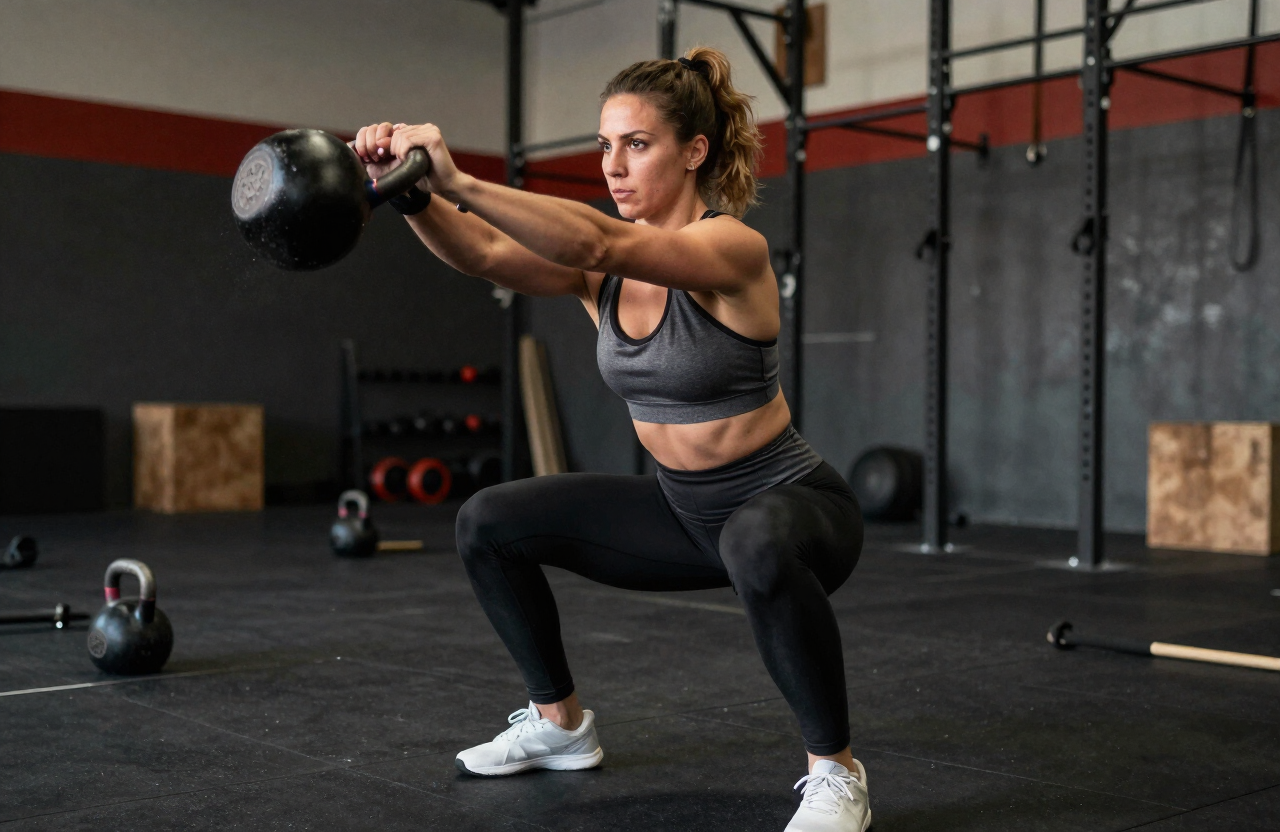
- Force transfer (moving load through a braced trunk): farmer's carries, medicine ball throws, kettlebell swings, woodchops. This is where core strength becomes athletic power.
A Complete Core Program
Three days a week, after your main lifting, 10 to 15 minutes:
Day 1 (anti-extension): RKC plank 3 x 20-30 seconds; dead bug 3 x 10 per side; ab-wheel or rollout regression 3 x 8-12.
Day 2 (anti-rotation + lateral): Pallof press 3 x 12 per side; side plank 3 x 30 seconds per side; suitcase carry 3 x 40 meters per hand.
Day 3 (transfer): farmer's carry 3 x 40 meters, heavy; med-ball throws or slams 3 x 10; bird dog 3 x 10 per side.
Progression: add seconds, reps, distance, or load — the core obeys progressive overload like any other muscle. A plank that never gets harder stops working.
Why Crunches Are Not Enough
Crunches train spinal flexion — a movement pattern, not a stabilizing one. A few sets are harmless for most people, but a program built on flexion alone leaves the obliques, deep stabilizers, and glutes untrained — the exact muscles that protect your spine. And for visible abs, no amount of crunching matters: abdominal visibility is almost entirely a function of body fat, which is set in the kitchen.
The Back Pain Connection
Most non-specific lower back pain is a stability problem, not a flexibility problem. When the deep stabilizers fail to brace the spine under load, the passive structures — discs and ligaments — take stress they were not designed for. Teaching the trunk to brace properly (the technique of tightening your core as if about to be punched, while breathing) plus anti-movement training addresses the root cause. If you have active or radiating back pain, get evaluated before loading anything.
Core Strength and Your Big Lifts
A weak core is the hidden ceiling on your squat, deadlift, and overhead press: the bar does not stall because your legs or shoulders are weak, but because your trunk cannot hold the position to deliver their strength. Adding Pallof presses and carries often adds pounds to the big lifts within weeks without touching them directly.
Breathing: The Forgotten Core Muscle
The diaphragm is the roof of the core cylinder. Proper brace — inhaling into the belly, then creating 360-degree pressure — multiplies spinal stability. Practice: inhale deeply through the nose, feel the ribs and belly expand, then hiss out slightly against the closed glottis while keeping the trunk rigid. That is the brace you use under every heavy set.
Conclusion
Train the core for what it does: resist force and transfer force. Planks with real tension, Pallof presses, suitcase and farmer's carries, and throws — three short sessions a week — will build a trunk that protects your spine, raises your big lifts, and shows up when body fat finally drops. Crunches were never the answer. Bracing was.